Should I Use Peptides for Fitness and Recovery?
What the research actually shows, what the FDA has and hasn’t approved, and how to think through the decision without the hype.
A Question I Get Almost Every Week Now
A client asked me at the end of a session last month, “Should I be doing peptides?” She had watched a video of someone injecting a clear liquid into their stomach, describing it as the missing piece for fat loss and faster recovery.
She isn’t the only one asking. I hear some version of this question from my clients and people I haven’t t even rained yet.
Here is the direct answer. For most healthy adults chasing general fitness goals, peptides are not something you need, and many of the ones being marketed on social media are not approved for human use at all. A small number of peptide-based medications, like the GLP-1 drugs used for weight management and diabetes, do have strong clinical evidence behind them. Those come from a doctor, with monitoring, not from a supplement website. Everything in between deserves a much closer look before you put it in your body.
This isn’t a medical article, and I’m not a doctor. I’m a trainer, and my job is to help you build a body that works well for the long haul. That means being straight with you about where peptides fit, and where they don’t.
Key Takeaways
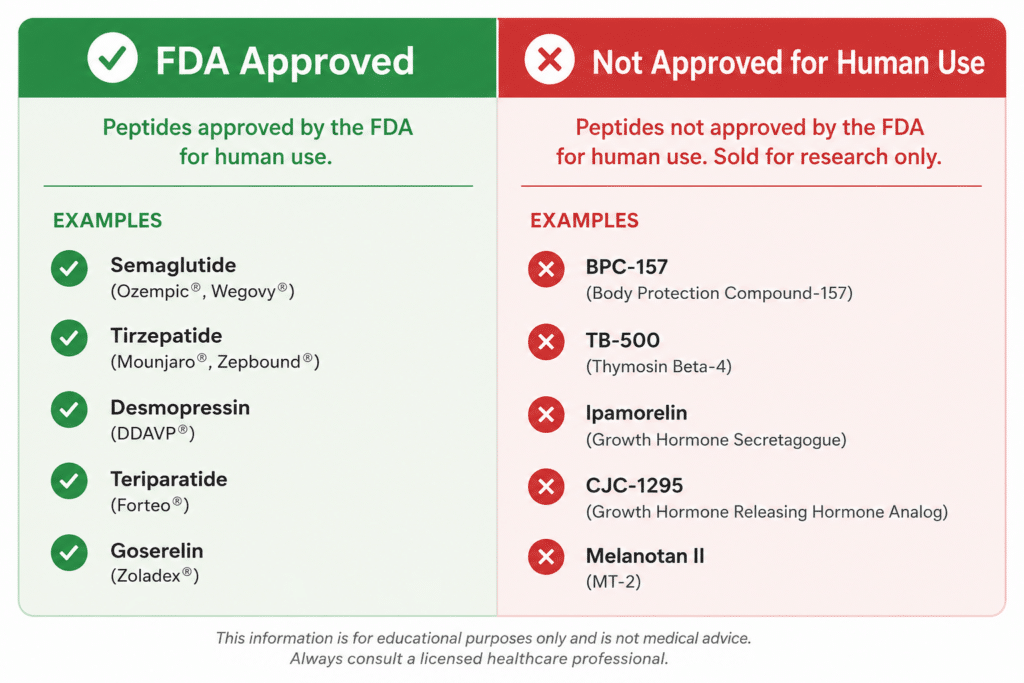
- Peptides are a broad category. Some are FDA approved prescription medications. Many others sold online as “research chemicals” are not approved for human use at all.
- BPC-157, one of the most talked about fitness peptides, has almost no human clinical data behind it and was flagged by the FDA for safety concerns in 2023.
- GLP-1 medications like semaglutide and tirzepatide are the clearest peptide success story, backed by large trials, but they require a prescription and medical supervision.
- Collagen peptides, the kind found in protein powders and drinks, are a different and much lower risk category, with modest evidence for skin and joint support.
- Before trying any peptide, ask whether it is approved for the use you want and whether you actually need it, or whether the fundamentals of training, sleep, and nutrition would get you further.
Why This Question Is Harder Than It Looks
The word “peptide” covers an enormous range of substances, from the collagen in your protein shake to prescription diabetes medication to unregulated compounds sold out of a warehouse with no quality testing.
Marketing has flattened all of that into one glowing category: peptides as a shortcut to healing faster, building muscle, losing fat, and aging slower.
I’ve watched clients spend real money on peptide protocols they found through an influencer, without knowing whether what they bought was actually the compound on the label.
I’ve also watched clients get real, monitored results from a GLP-1 prescription their doctor managed closely.
Both of those experiences involve the word “peptide.” They are not the same thing, and treating them as if they are is where people get into trouble.
The pressure to try something new is real too. If you have hit a plateau after months of consistent training, it is tempting to believe an injection will do what patience and progressive overload haven’t yet. I understand the appeal. I also think you deserve an honest answer instead of a sales pitch.
What the Research Actually Shows
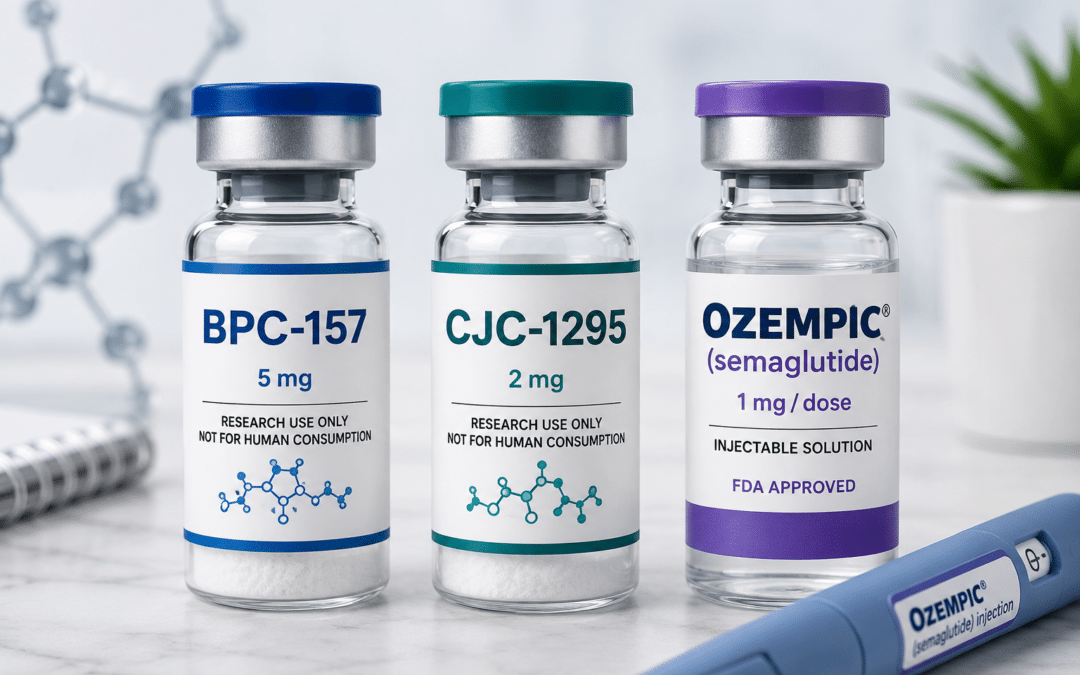
Start with BPC-157, since it comes up more than any other fitness peptide. It is a synthetic compound derived from a protein found in stomach tissue, and it is heavily promoted for healing tendons, ligaments, and general recovery. Nearly all of the supporting research comes from animal studies conducted by a single research group in Croatia.
In late 2023, the FDA added BPC-157 to a list of substances it considers to carry significant safety risks, including the potential to trigger an immune response, and noted that compounded products containing it may carry impurities. It is not approved as a drug, food, or supplement ingredient in the United States, and it is banned by the World Anti-Doping Agency.
As of mid-2026, federal regulators have begun reviewing whether some of these restrictions should loosen, but that review is ongoing, and the underlying human safety data has not changed. If a peptide has been studied mainly in rats, that is worth knowing before it goes in your body.
Growth hormone-releasing peptides like CJC-1295 and ipamorelin sit in a similar spot. They are popular in anti-aging and bodybuilding circles for their supposed muscle building and fat burning effects, but they are not FDA approved for those purposes, and long term human safety data is thin.
Then there is the other end of the spectrum. GLP-1 receptor agonists, including semaglutide and tirzepatide, are peptide based medications with genuinely strong evidence behind them. In one major clinical trial, participants taking semaglutide lost close to 15 percent of their body weight on average over roughly 16 months, compared to about 2 percent in the placebo group.
Tirzepatide trials showed even larger reductions, in the range of 16 to 22 percent depending on dose. These medications have gone through the full FDA approval process, with large controlled trials and ongoing monitoring for side effects. That is a completely different evidence base than a peptide sold through a wellness website with no oversight.
Collagen peptides deserve a mention too, because they get lumped into the same conversation and don’t belong there. These are the peptides in many protein powders and drinks, derived from broken down collagen protein.
The evidence for skin elasticity and joint comfort is modest but real, and the safety profile is closer to a food than a drug. If your only exposure to “peptides” has been a collagen supplement, you are in much safer territory than someone injecting an unregulated compound bought online.
My Two Question Filter
I use what I call the Green Light Test with clients, two questions asked in order.
First: is this specific peptide approved for the specific use I want, by a regulatory body that requires real human safety data? Not “has it been studied,” but approved, for this purpose, in humans.
Second: do I actually need it, or would consistent basics get me most of the way there? A lot of what peptides promise, faster recovery, better body composition, more energy, overlaps heavily with what sleep, protein intake, and smart programming already deliver, without the legal gray area or the unknown long term risk.
If a peptide fails either question, that’s your answer, at least until the research and regulation catch up. If it passes both, that conversation belongs with your physician, not your trainer and not a message board.
Where This Fits Into Actual Training
This typically comes up most with two types of clients: people chasing faster injury recovery, and people who feel stuck on fat loss after doing everything “right.”
In both cases, I start in the same place I’d start with anyone, by looking at what’s actually happening in their training and daily habits before any conversation about outside substances.
For recovery, that means looking at sleep quality, protein intake, training volume relative to how well someone is recovering, and whether an injury has actually been evaluated by a physical therapist or sports medicine doctor.
I’ve had clients convinced they needed BPC-157 for a nagging shoulder issue who turned out to just need a proper rehab protocol and two more rest days a week. The shoulder got better. No injection required.
For fat loss plateaus, the conversation is different but the process is the same. You should audit training consistency, nutrition tracking accuracy, sleep, and stress before assuming the plateau requires a pharmaceutical solution. Some clients, after that honest look, genuinely are candidates for a conversation with their doctor about GLP-1 medication, and I support that when it’s medically guided. What I won’t do is help someone source or dose an unregulated compound, because that’s outside my training and outside what any trainer should be doing.
Practical Steps Before You Decide Anything
- Write down what problem you’re actually trying to solve. Faster injury recovery, more strength, weight loss, and better skin are different goals with different real answers. A vague sense of wanting an edge isn’t specific enough to act on safely.
- Check the regulatory status of the exact peptide, not the category. Search the compound name alongside “FDA” and “2026” before you buy anything. Status changes, and what was restricted last year may be under review now, or vice versa.
- Rule out the boring fixes first. Get seven to nine hours of sleep for two weeks, hit your protein target daily, and stick to your program without changes before you conclude the basics aren’t working.
- If an injury is involved, see a professional who can diagnose it. A physical therapist or sports medicine doctor can tell you what’s actually wrong, which changes everything about what treatment makes sense.
- If you’re considering a prescription peptide like a GLP-1 medication, start with your doctor, not a telehealth ad. Ask about candidacy, monitoring, and what happens if you stop.
- Never buy an injectable peptide from a website with no prescription requirement. Products sold this way are frequently mislabeled or contaminated, and you have no way to verify what’s actually in the vial.
- Bring the conversation to your trainer as part of the whole picture. Tell me what you’re considering. I can’t prescribe or advise on dosing, but I can help you figure out whether your training and recovery plan already addresses what you’re hoping the peptide will fix.
Frequently Asked Questions
Is BPC-157 safe to use for injury recovery? No one can say with confidence, because it hasn’t been through the kind of human clinical trials that establish safety and dosing. The FDA flagged it for potential safety risks in 2023, and it remains unapproved for human use. Most supporting evidence comes from animal studies conducted by a single research group.
Are GLP-1 medications like semaglutide considered peptides? Yes, semaglutide and tirzepatide are both peptide based medications. They differ from compounds like BPC-157 because they went through full FDA clinical trials and approval, and they require a prescription with medical monitoring rather than being sold as unregulated supplements.
Can a personal trainer prescribe or recommend peptides? No. Trainers are not licensed to prescribe, diagnose, or advise on medication dosing, including peptides. A good trainer can help you evaluate whether your training and recovery already address your goal, but any decision about a prescription peptide belongs with a physician.
Why are peptides so popular on social media right now? Peptides promise fast, dramatic results for recovery, aging, and body composition, which makes compelling content. Regulation hasn’t kept pace with the marketing, so unapproved compounds are often presented with the same confidence as medications that actually went through clinical trials.
Are collagen peptide supplements the same risk category as injectable peptides? No. Collagen peptides used in protein powders and drinks come from food sources and have a safety profile closer to a supplement than a drug. The evidence for benefits like skin and joint support is modest, but the risk profile is far lower than unregulated injectable compounds.
The Bottom Line
I’m not saying peptides never matter. Some do, and the ones that do have earned it through real evidence and real oversight. But the honest starting point isn’t “what’s the newest thing,” it’s “what does the research actually show, and have I done the basics well enough to know I need more.” Most of the time, the basics haven’t been fully tried yet. Get those right first. Then, if a real medical case remains, have that conversation with a doctor who can see your full picture, not a comment section.
Keep Learning
- Sleep and Recovery: The Missing Link in Your Fitness Results — why the hours you’re not training might matter more than the hours you are.
- Hydration: Understanding What Your Body Actually Needs — another “basics before biohacks” look at a fundamental that gets overlooked.
If you need one on one training, group training or fitness advice, please contact me.
